Your Org Chart is Already Dead * Amputation Without Architecture is Malpractice
U.S. employers posted 42% fewer middle management roles since 2022. Executives call it progress. I call it organizational nerve damage. Flattening without architecture is the costliest mistake of the Agent-First Era. Here is the blueprint most companies refuse to build.

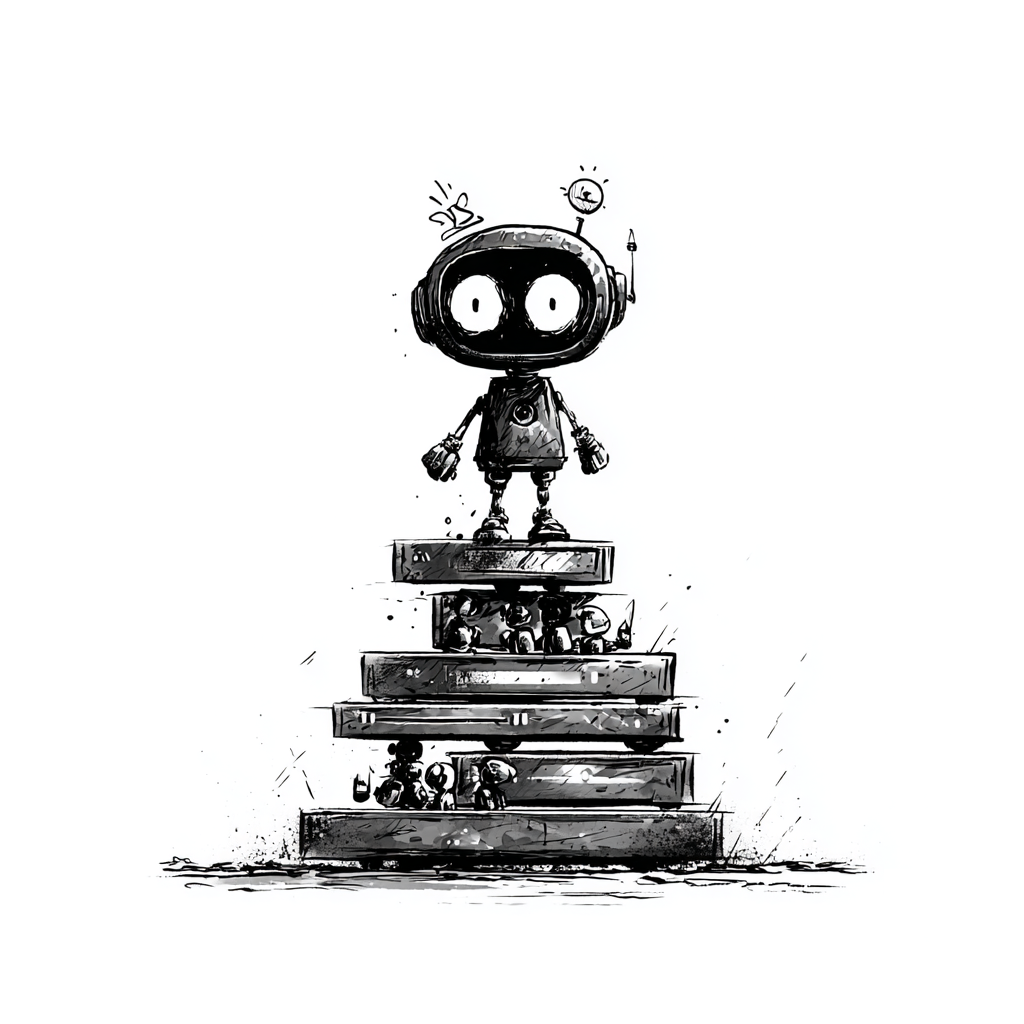
U.S. employers posted 42% fewer middle management positions in late 2024 versus spring 2022 [1]. Most executives celebrate this as the progress deliverd by their AI implementation. I see organizational nerve damage.
The consulting class calls it unbossing. Deloitte frames it as liberation. Gartner predicts 20% of organizations will eliminate more than half their middle managers by 2026 [1]. The boardroom consensus treats this as proof that the Agent-First Era rewards flatter hierarchies. The boardroom consensus is wrong.
What I see across every company executing this playbook is the same catastrophic pattern: they delete the nervous system and expect the body to keep functioning. AI agents are reshaping your org chart whether you architect the transition or not. This article exposes why flattening without replacing the architecture is the most expensive mistake of the Agent-First Era. The Functional Dissolution Principle demands three architectural layers: a nervous system, a social contract, and a governance layer. Most companies have not begun to build any of them.
The Unbossing Delusion
The evidence against reckless flattening is already in the data. Gallup research indicates that as span of control widens, engagement becomes entirely dependent on manager talent and feedback cadence... capacities that mathematically collapse when you triple direct reports from five to 15 without changing the architecture [2]. That collapse translates directly into institutional knowledge hemorrhage, senior individual contributor attrition, and the quiet collapse of mentorship pipelines that took a decade to build.
I call this the Functional Dissolution Principle, and I introduced it in my book AI Agents: They Act, You Orchestrate. The principle states: any function whose operations can be defined by rules and whose outcomes can be verified is a candidate for full automation. The critical word is candidate. Candidate does not mean delete the department by Friday. Dissolution requires replacement architecture. Without it, you are performing surgery with a chainsaw.
The unbossing trend treats a structural transformation as a headcount exercise. Remove the middle managers. Hand the survivors AI copilots. Declare victory in the quarterly earnings call. Meanwhile, the coordination functions those managers performed, the escalation protocols, the context translation between strategy and execution, the political negotiation between competing teams, vanish into a vacuum. Nobody replaced them. Nobody even inventoried them.
I coined the term Functional Dissolution to demand that leaders treat dissolution as an architectural discipline, never as a headcount reduction exercise. The difference between dissolution and amputation is the prosthetic you build before you cut.
The First Extinction Event
This pattern already played out in the real world. In mid-2025, an autonomous AI Agent codenamed XBOW claimed the number-one ranking on HackerOne's bug bounty platform. An entire department, the artisanal penetration testing team, became obsolete overnight. Continuous, 24/7 automated exploitation replaced the 200-page PDF pentest report, the expensive point-in-time snapshot, at a fraction of the cost.
XBOW dissolved the function entirely. The human experts did not disappear. Their value migrated upward: from finding routine bugs to commanding the hunt, from tactical execution to strategic threat modeling. The department died. The human premium survived. This is Functional Dissolution executed correctly.
The contrast with the unbossing trend is damning. XBOW's creators built the replacement architecture before they dissolved the function. They defined the protocols, the verification mechanisms, the human escalation paths. Most companies flattening their org charts today skip every one of those steps.
Three Layers You Have Not Built
Most companies have built zero of the three architectural layers required to replace human management coordination. The Functional Dissolution Principle demands these three layers.
- The first layer is the enterprise nervous system: the Model Context Protocol (MCP). MCP is the standard that decouples the agent's reasoning engine from the tools it wields. It creates a discoverable library of corporate capabilities that any agent can find and operate. Without MCP, you have a collection of brilliant, isolated brains in jars. Each agent performs its narrow task with precision and communicates with nothing. Your dissolved departments become disconnected islands, and the human Orchestrator becomes the frantic manual translator between them. That is friction wearing a new name.
 Peter van Hees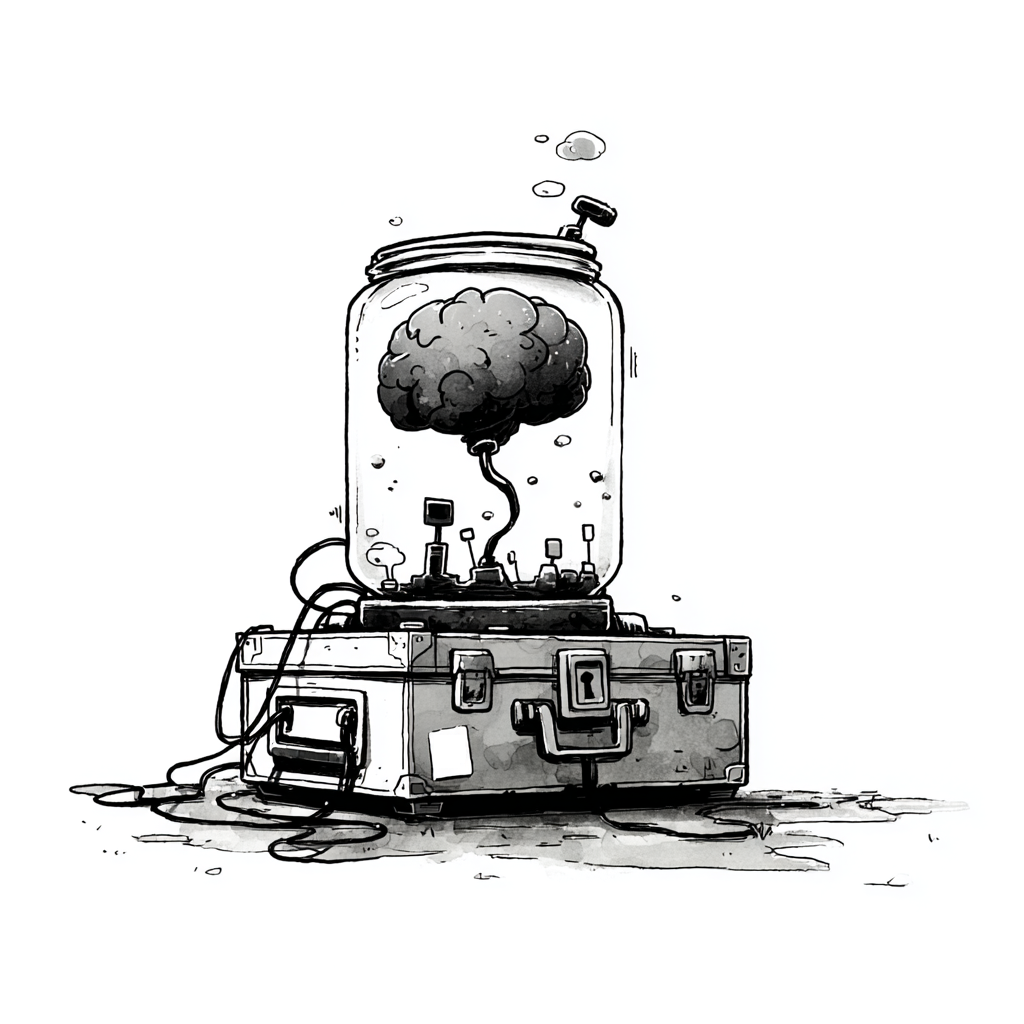
- The second layer is the machine social contract: the Agent2Agent Protocol (A2A). A2A is the open standard that enables autonomous agents to discover, negotiate, and collaborate with each other without human intermediaries [3]. This is the protocol that allows your sales agent to negotiate a delivery timeline with your logistics agent without routing every interaction through a human coordinator. Without A2A, your flattened org produces the exact same coordination overhead you eliminated the managers to remove.
 Peter van Hees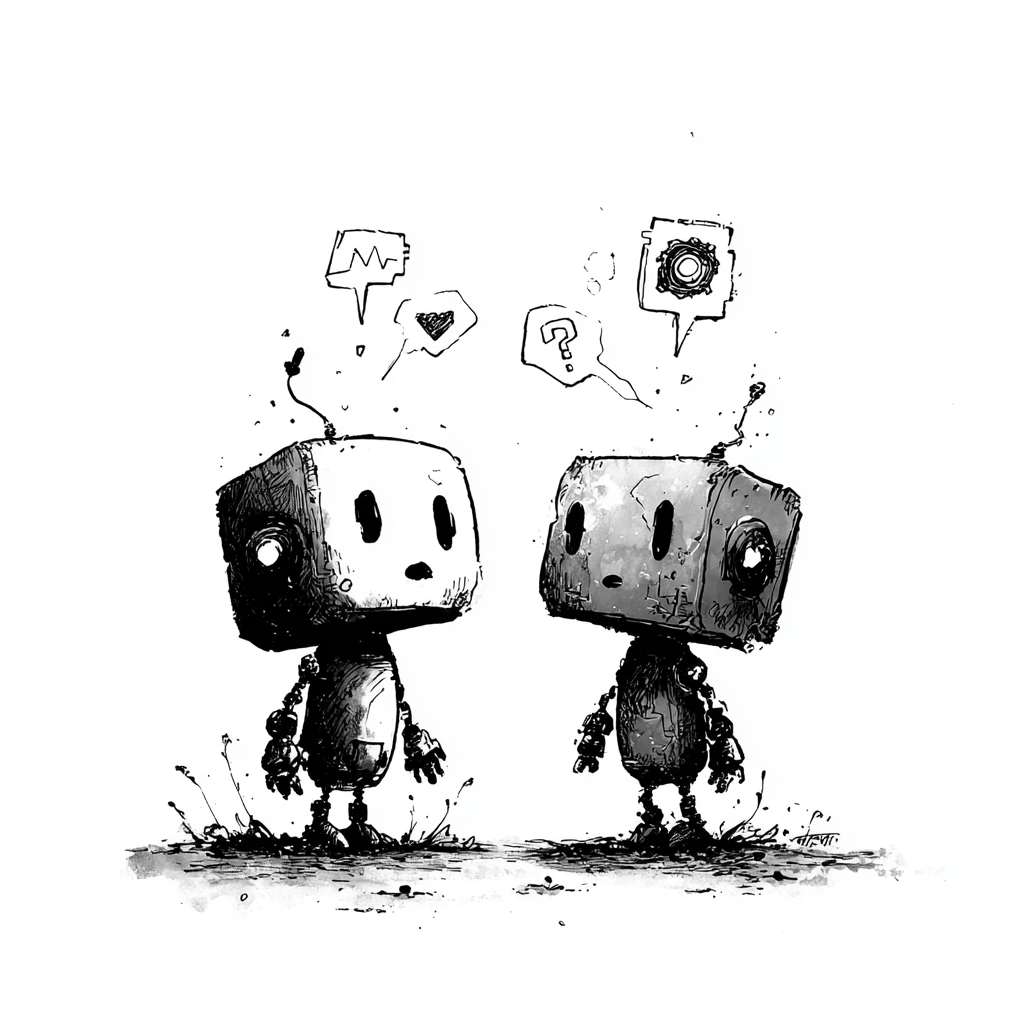
- The third layer is operational governance: AgentOps. AgentOps is the discipline that governs probabilistic actors the same way DevOps governs deterministic code. The AgentOps Trinity (Provision, Monitor, Govern) transforms your silicon workforce from a collection of unmanaged experiments into a disciplined, accountable team. Provision is hiring: embedding each agent with identity, purpose, and constraints before it takes a single action. Monitor is oversight: real-time tracking of performance, cost, and behavior. Govern is rule of law: policy enforcement, Intelligent Circuit Breakers, and human escalation pathways.
You would never hire 500 employees without HR, payroll, and a code of conduct. You are deploying 500 agents without any of the three.
The Company as Computer
Your hierarchical org chart needs a successor built on different physics entirely. I call it the Company as Computer, an organization that operates as a single, coordinated organism of carbon and silicon intelligence.
OpenAI's guide on building AI-native engineering teams puts it bluntly: the question is no longer how many people do we need? but what combination of human and Synthetic Labor delivers the highest strategic output? [4]. Deloitte's own research confirms the direction: the middle manager role is dissolving into a new function, the human Orchestrator of hybrid carbon-silicon teams [1].
This architecture demands new line items on your P&L. Your CFO needs the Silicon Salary Model. The Silicon Salary Model is the framework that treats agentic compute as variable labor cost, metered by the thought. Cognitive compensation, tool and equipment costs, institutional knowledge maintenance: every API call, every inference, every retrieval from a vector database carries a price. Make it visible or watch it metastasize into the shadow IT of the Agent-First Era.
Your Chief Human Resources Officer needs a new function: AgentOps. Your CIO needs new roles on the org chart: Agent Orchestrator, Context Engineer, System Verifier [5]. These are the positions that replace middle management. They do not coordinate human actors. They architect, monitor, and govern autonomous systems.
Where Dissolved Managers Must Climb
The middle managers displaced by Functional Dissolution face a binary choice: ascend the Human Premium Stack or accept commodification.
The Human Premium Stack defines three tiers of durable human value that agents cannot occupy.
- High-Context Negotiation is the ability to read a room, build rapport, and orchestrate alignment between competing human agendas. No agent maps the subtext of a tense boardroom.
- Moral Arbitration is the capacity for ethical judgment when data is ambiguous and consequences carry moral weight. An agent executes within constraints; a human defines the constraints.
- Zero-to-One Innovation is the creation of something from nothing, the conceptual leap that no optimization engine replicates.
The emerging roles confirm this stack. CIO reports Agent Orchestrators designing the systems agents execute [5]. Optimum Partners defines System Verifiers auditing agent outputs for correctness and edge cases [6]. OpenAI designates AI product engineers and agent Orchestrators as the core of AI-native teams [4]. Every one of these roles operates within the Human Premium Stack. Every one of them demands the strategic, ethical, and creative capacities that Synthetic Labor cannot provide.
WhiteCrow Research frames the binary with precision: middle managers become Orchestrators or they face automation [7]. Agents commodified the translator role between executives and teams, the role that justified most middle management positions for decades. Translation at machine speed costs pennies. The value that survives is orchestration.
The Architecture of Liberation
Here is the reframe most readers will not expect. The org chart was never a strength. It was a coordination hack for an era when carbon was the only available processor. Hierarchy solved a scaling problem: how do you coordinate thousands of humans when communication is slow, context is local, and information degrades at every relay? You build layers of translators and escalation paths and call them departments.
That problem no longer exists. Agents communicate at machine speed. MCP makes context universally discoverable. A2A enables negotiation without human relay. The scaling hack is obsolete, and clinging to it is the real malpractice.
Functional Dissolution, done correctly, liberates human value. The Company as Computer frees humans to operate exclusively in the Human Premium Stack: the strategic, ethical, and creative work that agents cannot touch. The tragedy is not that the org chart is dying. The tragedy is that most companies are killing it without building the architecture that makes dissolution worthwhile.
The org chart is a fossil. Treat its dissolution as architecture, not amputation. Build the nervous system. Establish the social contract. Install the governance. Then, and only then, will your Company as Computer deserve the humans who orchestrate it.
❗Update: A previous version of this article referenced a specific engagement drop percentage. While consistent with broader industry data on span dilution, the text has been updated to more improvedly reflect the specific findings of the cited Gallup report regarding manager capacity.
This article scratches the surface of one architectural shift from AI Agents: They Act, You Orchestrate by Peter van Hees. The book maps 18 chapters across the full transition from the Mobile-First Era to the Agent-First Era, from the Titan Protocol and Swarm Architecture that govern agent topology to the Silicon Salary Model that gives your CFO new language, to the Human Premium Stack that shows you where your career must climb. If the gap between unbossing and Functional Dissolution resonated, the book gives you the complete blueprint. Get your copy:
🇺🇸 Amazon.com
🇬🇧 Amazon.co.uk
🇫🇷 Amazon.fr
🇩🇪 Amazon.de
🇳🇱 Amazon.nl
🇧🇪 Amazon.com.be
References
[1] Deloitte, "Future of the middle manager: The unbossing transformation," Human Capital Trends 2025. https://www.deloitte.com/us/en/insights/topics/talent/human-capital-trends/2025/future-of-the-middle-manager.html
[2] Gallup, "Span of Control and Optimal Team Size for Managers," Gallup Workplace, 2024. https://www.gallup.com/workplace/700718/span-control-optimal-team-size-managers.aspx
[3] Google Developers Blog, "Agent2Agent Protocol: A New Era of Agent Interoperability," 2025. https://developers.googleblog.com/en/a2a-a-new-era-of-agent-interoperability/
[4] OpenAI, "Building an AI-Native Engineering Team," 2025. https://cdn.openai.com/business-guides-and-resources/building-an-ai-native-engineering-team.pdf
[5] CIO, "The New Org Chart: Unlocking Value with AI-Native Roles in the Agentic Era," 2025. https://www.cio.com/article/4060162/the-new-org-chart-unlocking-value-with-ai-native-roles-in-the-agentic-era.html
[6] Optimum Partners, "Engineering Management 2026: How to Structure an AI-Native Team," 2026. https://optimumpartners.com/insight/engineering-management-2026-how-to-structure-an-ai-native-team/
[7] WhiteCrow Research, "AI's Impact on Middle Management: A New Era of Leadership," 2025. https://www.whitecrowresearch.com/resources/2025/07/17/ais-impact-on-middle-management-a-new-era-of-leadership/