Your AI Agent Is Probably an Assistant * Autonomy Spectrum
79% of organizations claim AI agent adoption. Only 23% are scaling actual agents. The Autonomy Spectrum exposes a classification error corrupting enterprise roadmaps, budgets, and timelines. Three tiers. Three covenants. One chasm you cannot upgrade across.

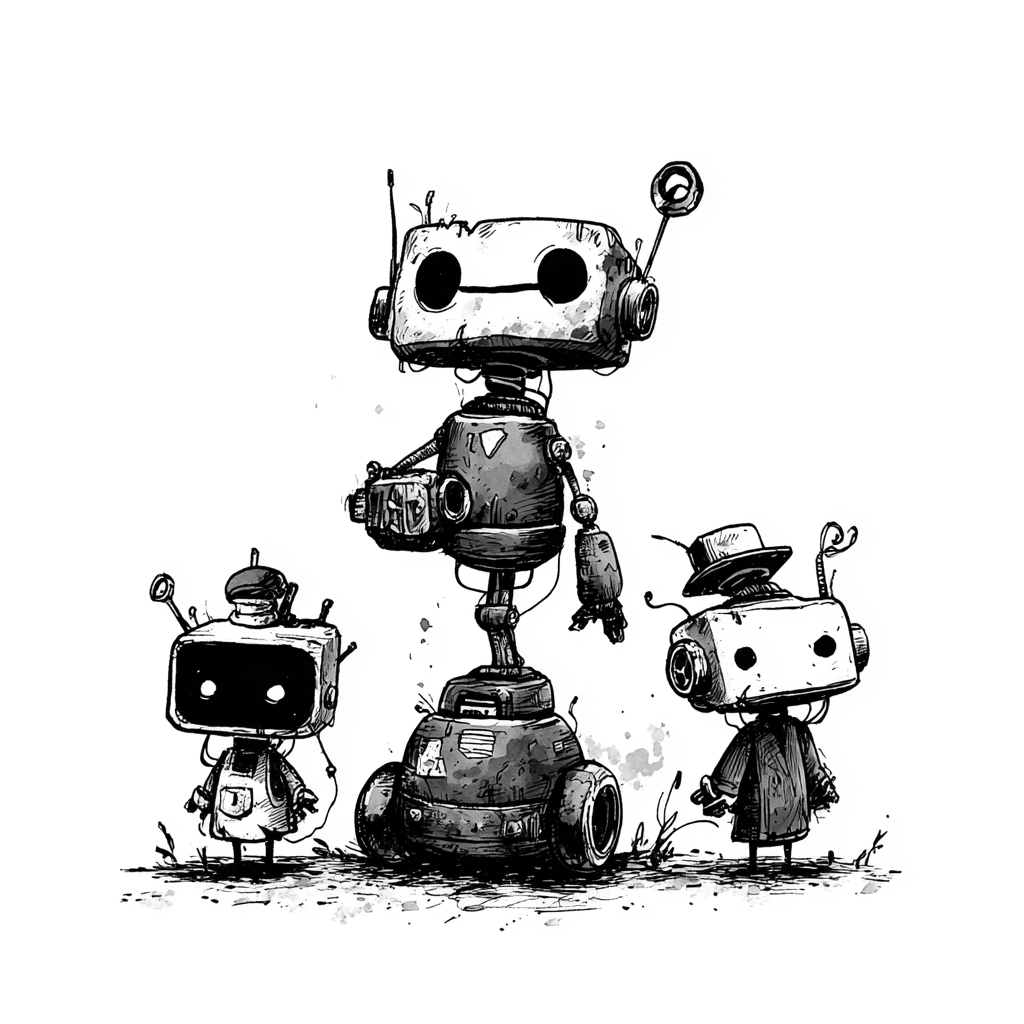
79% of organizations report AI Agent adoption [1]. Only 23% are scaling agents in any real sense [2]. The remaining 56% have misclassified their assistants, and their roadmaps are built on that error. The problem is taxonomic, not operational.
The Autonomy Spectrum is a three-tier classification framework that maps every AI system to one of three fundamentally different categories: bot (puppet), assistant (servant), or AI Agent (actor), based on its level of autonomous goal-seeking capability. This article gives you that taxonomy: the puppet, the servant, the actor. You will learn why the gap between assistant and AI Agent is an architectural chasm, and what you must rebuild to cross it.
The 56% Misclassification * Your roadmap is built on the wrong taxonomy
Gartner has named the disease: agent-washing, the practice of rebranding existing AI assistants, bots, and automation tools as AI Agents without adding genuine agentic capabilities [3]. Vendors repackage chatbots and robotic process automation scripts under an AI Agent label, and buyers accept the packaging at face value. The result is a market-wide classification error with real financial consequences.
The PwC survey shows 79% of organizations claiming they have adopted AI Agents [1]. The McKinsey Global Survey tells a different story: only 23% of respondents report scaling agentic AI systems, and in no single business function does that number exceed 10% [2]. The gap between these two figures is not explained by early-stage piloting. It is explained by mislabeling. The majority of what enterprises call agents are assistants. And the majority of what they call assistants are bots.
This matters because classification drives every downstream decision. Your budget, your timeline, your hiring plan, your data architecture, your governance model: all of them inherit the assumptions of your taxonomy. Classify an assistant as an agent, and you will budget for an integration when you need a full rebuild. The 40% of agentic AI projects that Gartner predicts will be canceled by 2027 [3] are the compounding cost of this single, upstream error.
What Are the Three Tiers of the Autonomy Spectrum? * Puppet, Servant, and Actor
The Autonomy Spectrum maps every AI system to one of three fundamentally different species, each running on a different covenant between human and machine. I introduce this classification in my book AI Agents: They Act, You Orchestrate.
The (chat)bot is a puppet. It executes deterministic sequences with no goal-seeking capability. The First Covenant of Software is Command: you code every instruction, and the machine executes without deviation. The bot operates under this covenant. It follows a script. If the script breaks, the bot breaks. Rule-based RPA, IVR phone trees, pre-programmed email sequences: predictable, verifiable, and structurally incapable of learning.
The assistant is a servant. It responds to explicit, human-initiated commands with natural language understanding. The Second Covenant of Software is Curation: intelligence is cultivated through data, not coded through rules. The assistant operates under this covenant. It waits for your prompt, processes it, and returns a single-step response. Microsoft Copilot summarizing your email. ChatGPT answering your question. Siri setting your alarm. The servant is smarter than the puppet, but it shares one fatal constraint: it does nothing until you tell it to.
The AI Agent is an actor. The Perceive-Reason-Act Cycle (PRA) is the continuous loop where an agent perceives its environment, reasons about goals and constraints, and acts to achieve outcomes without waiting for human prompts. The Third Covenant of Software is Intent: you describe an outcome in natural language, and the agent architects the execution path. The AI Agent operates under this covenant. It pursues goals autonomously using PRA, deploys tools, and retains persistent memory. It initiates action. This is the species that the Agent-First Era demands, and the species that 56% of enterprises have mistaken for their assistant.
I call the Autonomy Spectrum a species classification because these tiers are not stages on a growth chart. I did not build this framework as a maturity model. A puppet does not grow into a servant. A servant does not evolve into an actor. Each species runs on different physics: different data architectures, different permission models, different organizational structures. You do not upgrade from one covenant to the next. You rebuild.
The Chasm Between Servant and Actor * Why you cannot upgrade across it
The critical insight of the Autonomy Spectrum is not the top or the bottom. It is the structural break in the middle.
Every assistant-to-agent roadmap I have reviewed makes the same assumption: more data, better models, deeper integrations, and the assistant will gradually become autonomous. This assumption is wrong. The transition from servant to actor requires replacing the entire operational stack. Stateless APIs become persistent memory stores. Reactive prompt-response loops become proactive goal-setting engines. Single-step completions become multi-step orchestrated workflows. Human-initiated triggers become autonomous execution within human-defined constraints.
The word for this is rebuild, and it terrifies every program office that budgeted for a plugin. IBM's own analysis confirms the gap between agentic AI capabilities and real deployment remains enormous [4]. The Arcade.dev survey found that only 34% of organizations achieved full implementation of their agentic systems despite heavy investment [5]. The rest stalled at the chasm.
The 40% cancellation rate Gartner forecasts by 2027 [3] will disproportionately hit the organizations that treated the chasm as a staircase. If your CDO presented the board a slide titled "Our AI Agent Roadmap" showing a smooth climb from Copilot to autonomous agent over 12–18 months, that slide is structurally wrong. The Autonomy Spectrum reveals why: the Second Covenant and the Third run on entirely different physics.
Audit your own stack against three checkpoints. First: is your data architecture structured for agent perception, or for human dashboards? Second: does the system have write access and execution authority, or only read access? Third: where does the agent's authority end and human escalation begin? Every "no" or "I don't know" is a structural barrier between your organization and the actor tier of the Autonomy Spectrum.
Why Agent-Washing Thrives * The Autonomy Spectrum confusion is the vendor's best weapon
Agent-washing is a classification exploit, and the industry treats it as a marketing nuisance. Vendors profit from the absence of a shared taxonomy. Without a clear standard for what separates a bot from an assistant from an AI Agent, every product gets labeled with whatever term carries the most budget authority. In 2026, that term is agent.
Gartner warns that vendors are "rebranding existing products, such as AI assistants, robotic process automation and chatbots, without substantial agentic capabilities" [3]. The five red flags Arya.ai identifies map directly onto the Autonomy Spectrum: no goal-based autonomy, scripted workflows, constant escalation to humans, no persistent memory, and no tool integration [6]. Every one of those red flags marks a system stuck below the chasm.
The financial exposure is real. Enterprises project an average 171% ROI on agentic AI investments [7]. That projection assumes the system is an actor. If 56% of deployed systems are actually servants, the projected ROI is built on a classification fiction. Budgets are flowing to the wrong tier.
Your first checkpoint as an Orchestrator: demand that every vendor classify their product on the Autonomy Spectrum before the demo begins. Is it a puppet, a servant, or an actor? If they cannot answer with precision, they have not done the architectural work to know. That tells you everything.
What Does the Autonomy Spectrum Reveal About Your Organization?* It classifies you, not just your systems
Most organizations will resist what comes next. The Autonomy Spectrum classifies more than your AI systems. It classifies your leadership posture.
If your entire AI strategy optimizes human-initiated workflows, you have accepted the role of operator. You are deploying servants to make the old world run faster. Crossing the chasm from servant to actor demands a leadership decision before it demands a technology upgrade. It requires delegating real authority to autonomous systems, trusting execution you cannot manually verify at every step, and redesigning your organization around outcomes rather than tasks. As I argue in Chapter 5 of my book AI Agents: They Act, You Orchestrate, the Delegation Ladder maps precisely this transition from describing tasks to granting full autonomy.
We are at Day Zero of the Agent-First Era. The agents at the top of the Autonomy Spectrum today are primitive ancestors of what is coming. The chasm between servant and actor will widen as the actor tier matures. The organizations that cross it now compound their advantage with every cycle. The ones who wait are not standing still; they are falling behind at an accelerating rate.
The Autonomy Spectrum is a mirror. Classify what you actually have, not what your vendor sold you. The 40% who cancel by 2027 will be the ones who mistook the chasm for a staircase. Stop building upgrade roadmaps. Build rebuild roadmaps. The distance between servant and actor is measured in architecture, not time.
The Autonomy Spectrum is one framework from Chapter 2 of AI Agents: They Act, You Orchestrate by Peter van Hees. The book maps 18 chapters across the full architecture of the Agent-First Era, from the Three Covenants of Software and the AIOS Architecture to the Delegation Ladder and the Functional Dissolution Principle. If the chasm between assistant and agent resonated, the book gives you the complete rebuild blueprint. Get your copy:
🇺🇸 Amazon.com
🇬🇧 Amazon.co.uk
🇫🇷 Amazon.fr
🇩🇪 Amazon.de
🇳🇱 Amazon.nl
🇧🇪 Amazon.com.be
References
[1] PwC, "AI Agent Survey," 2025. https://www.pwc.com/us/en/tech-effect/ai-analytics/ai-agent-survey.html
[2] McKinsey, "The State of AI in 2025: Agents, Innovation, and Transformation," 2025. https://www.mckinsey.com/capabilities/quantumblack/our-insights/the-state-of-ai
[3] Gartner, "Gartner Predicts Over 40% of Agentic AI Projects Will Be Canceled by End of 2027," Press Release, June 2025. https://www.gartner.com/en/newsroom/press-releases/2025-06-25-gartner-predicts-over-40-percent-of-agentic-ai-projects-will-be-canceled-by-end-of-2027
[4] IBM, "AI Agents in 2025: Expectations vs. Reality," IBM Think, 2025. https://www.ibm.com/think/insights/ai-agents-2025-expectations-vs-reality
[5] Arcade.dev, "30 Agentic Framework Adoption Trends," 2025. https://blog.arcade.dev/agentic-framework-adoption-trends
[6] Arya.ai, "How to Spot and Avoid Agent Washing in Enterprises," 2025. https://arya.ai/blog/how-to-spot-avoid-agent-washing
[7] Multimodal.dev, "Agentic AI Statistics 2025," 2025. https://www.multimodal.dev/post/agentic-ai-statistics