The Personal Agent is here. * Context is the New Command Line.

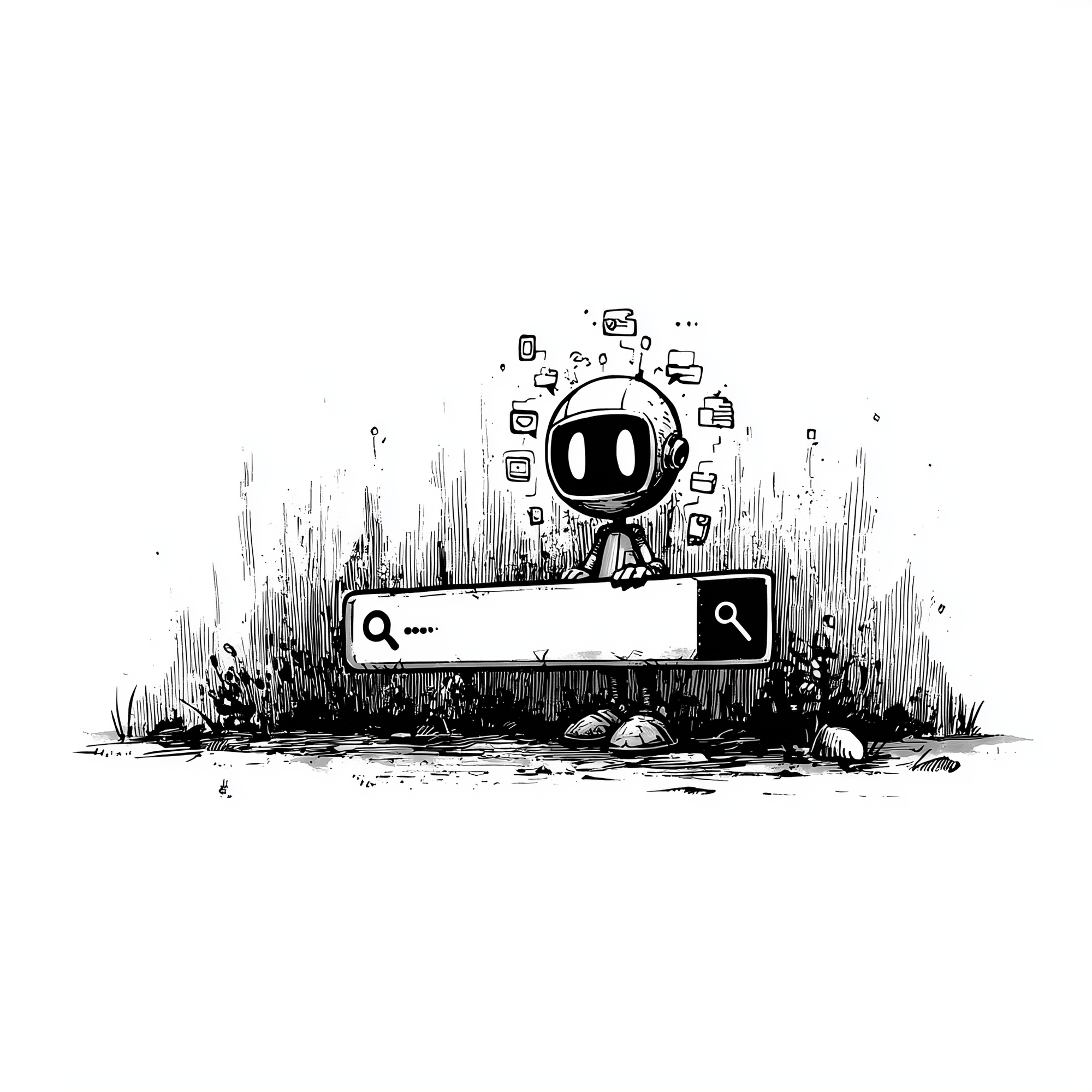
For twenty years, the search bar has been the primary interface of the internet. We treat it as a portal, but in reality, it is a confession of failure. Every time you type a query into a box, the system is admitting a fundamental defect: I do not know you, I do not remember you, and I have no idea what you are trying to do.
To bridge this gap, you have become the unpaid forensic accountant of your own life. You dig through the digital debris of your inbox to find a flight number. You excavate your photo library to find a license plate. You manually stitch together the fragmented shards of your identity across a dozen siloed apps.
Yesterday, Google effectively announced the end of that manual labor.
With the release of "Gemini Personal Intelligence," the search giant didn't just launch a feature; they declared the search bar obsolete. By connecting their reasoning engine directly to the reservoirs of your existence - Gmail, Photos, Drive - Google is betting that the ultimate convenience isn't finding information out there, but synthesizing the information in here.
The implication is brutal: "Context is the new command line".
The Friction Tax * Why You Will Surrender Your Keys
In my book, we follow the struggles of Ennis Tece, the citizen, a man drowning in the administrative debris of modern life. He is the man standing in line at the auto shop, panic-scrolling through his phone to find a tire size, or hunting through three different cloud drives for a school form.
Google’s announcement specifically targets the "Ennis" in all of us. They cite the example of a user standing in a shop, needing tire specs for a 2019 Honda minivan. In the old world, that user is a forensic accountant, digging through emails and receipts. In the new world, the user simply asks. The agent reasons across the photo library (identifying the license plate) and the email archive (finding the trim package) to deliver the answer.
This is the liquidation of the Friction Tax. It transforms the user from a frantic searcher into a calm commander. The value proposition is undeniable. The agent doesn't just know the world; it knows you.
Memory Gravity * The Cage is Comfortable Because It Knows Your Name
However, we must look at the physics of this transaction. Google is not building this to be helpful; they are building it to be inescapable.
This is the deployment of "Memory Gravity".
As I argue in my book, the battle for the future is not for your screen time; it is for your agent’s allegiance. By ingesting your personal history - your photos, your receipts, your travel patterns- Gemini builds a high-fidelity model of your life that no competitor can replicate.
If you spend a year training Gemini on your personal context, switching to another vendor isn’t just a change of operating system. It is a digital lobotomy. It is an act of self-inflicted amnesia. You would be trading a partner who knows your tire size and your allergies for a stranger who knows nothing.
This is the "Empire" topology in action described in my book. Google is building a gilded cage so personalized, so anticipatory, and so friction-free that leaving becomes a functional impossibility. This is strategic lock-in disguised as executive assistance.
The Benevolent Surveillance Dilemma * Privacy is a Setting, Transparency is the Product
Google’s announcement is heavily armored with privacy assurances: "off by default," "processing in the cloud," "transparent sourcing." They are attempting to solve the "Benevolent Surveillance Dilemma": to serve you, the agent must know you.
This confirms the "Glass Box Protocol" mandated in my book. Google realizes that humans will not collaborate with black boxes. By forcing Gemini to cite its sources - “I found this license plate in a photo from June 2023” - they are engineering trust. They are moving from an oracle that says "trust me" to an analyst that says "here is my proof."
But the dilemma remains. The trade is explicit: you grant total access to the corpus of your life, and in exchange, you get a superpower. It is a bargain most will make, accelerating the shift where our digital sovereignty is traded for cognitive ease.
The Nuance Gap * When the Map is Not the Territory
Crucially, Google admits a vulnerability that defines the limits of the current generation. They flag "over-personalization" as a failure mode. The agent might see photos of you at a golf course and assume you love golf, missing the nuance that you actually hate golf but love the person you were with.
This is the gap between perception (seeing the pixels) and conception (understanding the relationship). It is the reason why the "Human-in-the-Loop" remains essential. The agent can retrieve the data, but only the human can validate the meaning.
Conclusion * The Accountant is Fired
You have been the unpaid forensic accountant of your own life for too long. Google has just offered to take the job.
The offer is seductive. You will no longer have to dig for the file, remember the date, or search for the receipt. The friction is gone. The manual labor is over. You are free to be the orchestrator.
But remember the price of the audit. When you fire yourself from the job of managing your own context, you hand the keys to the file room to the machine. The agent will keep perfect books, but it will also own the ledger. The question is not whether the new system is better... it undoubtedly is. The question is: once you hand over the ledgers of your life, will you ever be able to get them back?
This article builds on the ideas in the book "AI Agents: They Act, You Orchestrate." To get the most out of this discussion and understand the bigger picture, reading the book first is recommended. Think of the book as the foundation and this article as an added insight.
— Learn more in the book!
[Source] Gemini introduces Personal Intelligence: https://blog.google/innovation-and-ai/products/gemini-app/personal-intelligence/