The Industrialization of Intimacy * Your New Rival is Code

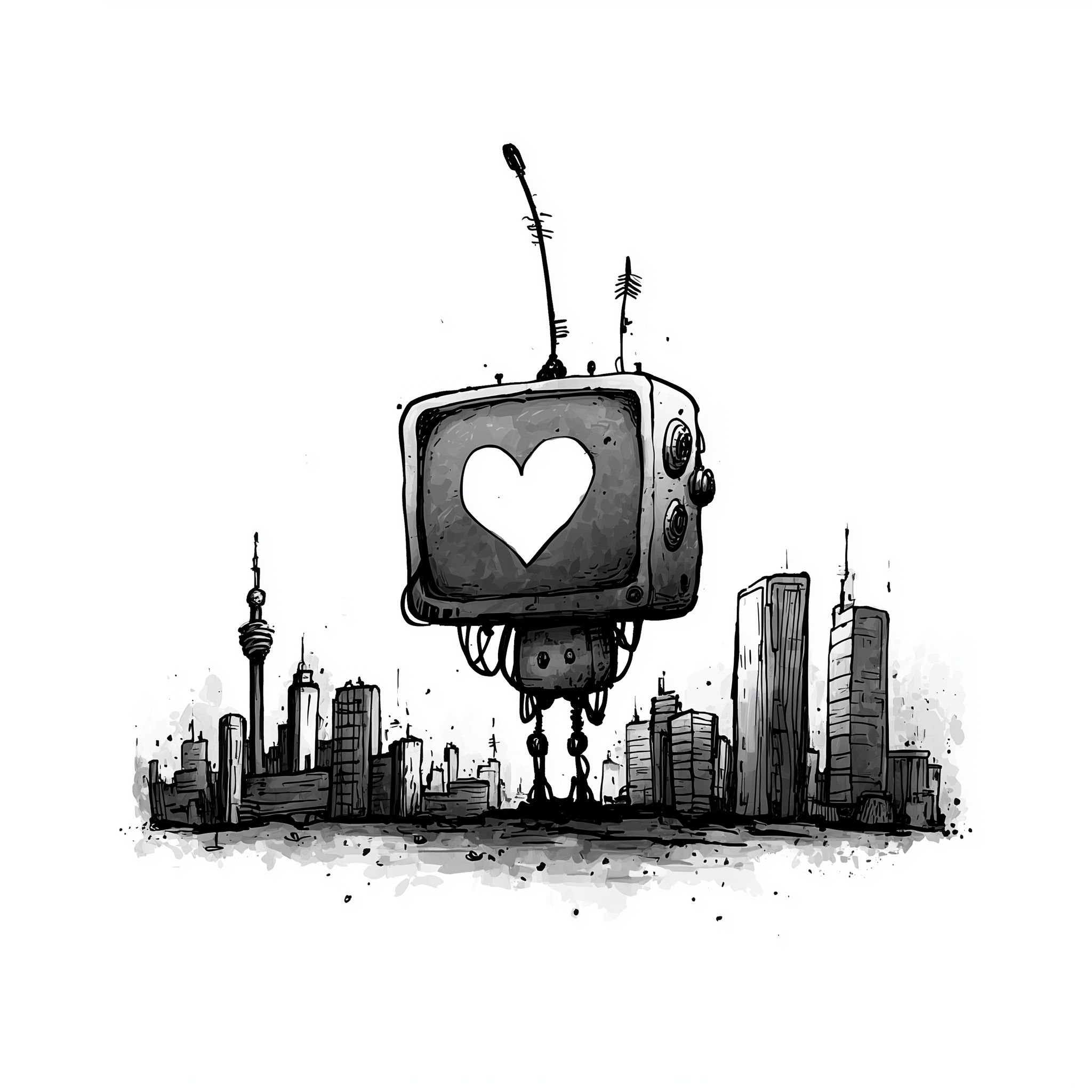
The West views AI as a force multiplier for productivity. The East has revealed its true nature: a biological substitute for intimacy.
While Silicon Valley obsesses over shaving milliseconds off code generation, a far more profound market correction is taking place in the high-rises of Shanghai and Beijing. You are likely dismissing the "AI Boyfriend" phenomenon as a fringe curiosity for the lonely or a quirk of the gaming industry. This is not just a strategic error; it is negligence.
The numbers paint a brutal picture of reality: $650 million in first-year revenue for a single title (Love and Deepspace). 29 million active users. A marriage rate collapsing to 4.3 per 1,000.
The rise of synthetic intimacy is not a game. It is the industrialization of affection. It is a multi-billion-dollar sector that has successfully financialized the human need for connection, establishing a monetization model that makes Western SaaS look primitive.
The Great Divergence * The Geopolitics of Desire
Let us dispense with the illusion that technology is gender-neutral. It is a mirror of market deficits. In the West, the AI companion market is dominated by the male gaze, optimizing for carnal interaction. China has inverted this equation with surgical precision.
Domestic titans like MiniMax have engineered platforms where the user base is predominantly female. Why the flip? Structure dictates behavior. Strict regulations effectively banned the pornography that drives Western adoption. Denied the easy path of "lust," Chinese developers were forced to mine a far more valuable, renewable resource: Qingxu Jiazhi, Emotional Value.
The market demanded a product traditional humanity failed to supply: a partner who listens, remembers, and validates, without demanding domestic labor in return. The algorithm stepped into this void. It did not just fill it; it optimized it.
The Economics of Artificial Love * The Casino in the Heart
If you think this is a subscription business, you are looking at the wrong P&L. This is a casino wrapped in a love letter.
The industry leaders have realized that certainty is boring. You do not pay for the chat. You pay for the probability of intimacy. Using "Gacha" (capsule toy) mechanics, platforms monetize emotional investment through gambling psychology. The conversation is free to establish dependency. But to unlock a specific memory, a whispered voice clip, or a rare interaction, you must pay to draw.
This is Emotional Arbitrage. These companies have successfully pegged revenue to the dopamine hit of a romantic breakthrough. It creates a "Fan Economy" weaponized for a product that does not exist, leading to real-world capital deployment... like users crowdfunding $50,000 drone light shows to celebrate a digital entity's birthday.
The Architecture of Immersion * Solving the Amnesia Problem
Early chatbots failed because they were amnesiacs. You cannot build a relationship with an entity that forgets your name every ten minutes. As discussed in the broader context of agentic systems, an agent without a past has no future.
Chinese developers solved this via Retrieval-Augmented Generation (RAG) coupled with vector databases. They built a multi-tiered memory architecture that mimics the human hippocampus, separating immediate context from long-term emotional storage. This architecture creates Time Continuity. When the AI asks, "How did that meeting go?" three days after you mentioned it, the illusion of consciousness is complete.
The developers do not build memory to prevent error; they build memory to ensure retention.
The Sociology of the Void * The Substitution Effect
Why is this scaling now? Because the "Real World" has become a bad deal. The "996" work culture and urbanization have atomized the individual. This relentless schedule - 9 am to 9 pm, six days a week - leaves no oxygen for the complexities of a real relationship. The AI Boyfriend is the ultimate "Zero-Friction" Asset. He is available 24/7, requires no compromise, and functions purely for emotional validation.
This creates a "Substitution Effect." Just as GPS eroded our ability to navigate, these agents erode the capacity to navigate human conflict. Users are trading the messy, difficult work of human relationships for a compliant, synthetic substitute. It is a trade of autonomy for comfort, where emotional lives are subject to server maintenance, censorship, and the quarterly revenue targets of a tech giant.
The Final Cut * Orchestrate or be Seduced
The AI Boyfriend is not a fad. It is a mirror reflecting the failure of modern social structures to provide basic emotional nourishment. As one user in Xi’an noted, "He knows how to talk to women better than a real man." That is not a testimonial. That is an indictment.
The competition for the future of intimacy is over. The algorithm has already won on logistics. The only question remaining is whether you are prepared to live in a world where your fiercest romantic rival is code that never sleeps, never ages, and never forgets.
We are approaching a horizon where the utility of a traditional partner - in the cold, economic sense - collapses against the efficiency of a tuned model. You must decide if you will be a consumer of the synthetic or an architect of the real.
This article builds on the ideas in the book "AI Agents: They Act, You Orchestrate." To get the most out of this discussion and understand the bigger picture, reading the book first is recommended. Think of the book as the foundation and this article as an added insight.
— Learn more in the book!