The Great Unbundling * Why Our Agent’s "Brain" Needs to Get Smaller

We have spent the last year defining the anatomy of an AI Agent. We built the skeletons, mapped the nervous systems, and established the Model Context Protocol (MCP) as the connective tissue. This foundation was necessary. It remains valid.
But as any architect knows, once the foundation is poured, you don't keep pouring concrete. You start refining the interior.
We are observing a critical maturation in how high-performance Agents are constructed. Until now, we have relied heavily on the System Message to do the heavy lifting. We stuffed personality, constraints, tool definitions, and procedural logic into one massive "God Prompt."
This approach works for prototypes. It fails at scale.
The next evolution of AI Agents isn't about building new agents; it is about unbundling them. We are moving configuration out of the context window and into a modular, loosely coupled architecture called Skills.
The Context Trap
The current bottleneck in Agent design is the "Context Tax."
When you define an AI Agent today, you likely load it with a hefty System Message and connect it to a dozen MCP servers. Every tool definition, every schema, and every instruction consumes tokens. Before the Agent has even processed a user request, a significant portion of its attention span is already mortgaged to its own existence.
This creates a "noisy" cognitive environment. The model struggles to distinguish between its core identity and its peripheral tools. It is like asking a carpenter to build a cabinet while carrying every tool they own in their arms simultaneously.
Decoupling Identity from Capability
The solution, pioneered by the team at Anthropic and emerging as the new standard, is to decouple Identity from Capability.
- The Agent (Identity): This remains the "System Message". But it is now lean. It defines who the agent is (the Runtime/OS) and its core values.
- The Skill (Capability): This is where the work happens. A "Skill" is simply a folder of files - scripts, documents, and specific instructions - that is injected into the runtime only when needed.
This is a profound architectural shift. We are moving away from defining "what an agent can do" inside the prompt, and instead treating capabilities as files.
Code is the Universal Interface
Why files? Because files are the most durable primitive of computing.
When you bake a procedure into a System Message, it is non-persistent. It lives and dies with that specific session. When you extract that procedure into a "Skill" (a folder containing a markdown instruction file, and possibly soime Phyton code), it becomes an asset.
- It is Version Controlled: You can track changes to your "Financial Analysis Skill" in Git.
- It is Composable: You can plug the same "Data Cleaning Skill" into a Legal Agent, an HR Agent, and a Coder Agent without rewriting a single line of prompt.
- It is Efficient: The Agent only loads the skill when the task requires it. The context window remains pristine until the moment of execution.
The "Genius Intern" Revisited
Consider the analogy of the "Genius Intern" (the LLM).
In the old model, we tried to train the intern by shouting a 50-page manual at them before every task. That is the System Message approach.
In the new model, we simply hand the intern a folder. "Here is the folder for tax preparation. It contains the forms, the calculator script, and the checklist. Read it, execute it, close it."
This doesn't make the intern less intelligent; it makes them more focused. It stops the model from hallucinating procedures because the procedure is hard-coded in the skill file, not vaguely remembered in the prompt.
Conclusion: The Modular Future
This does not negate the work we have done building AI Agents; it optimizes it.
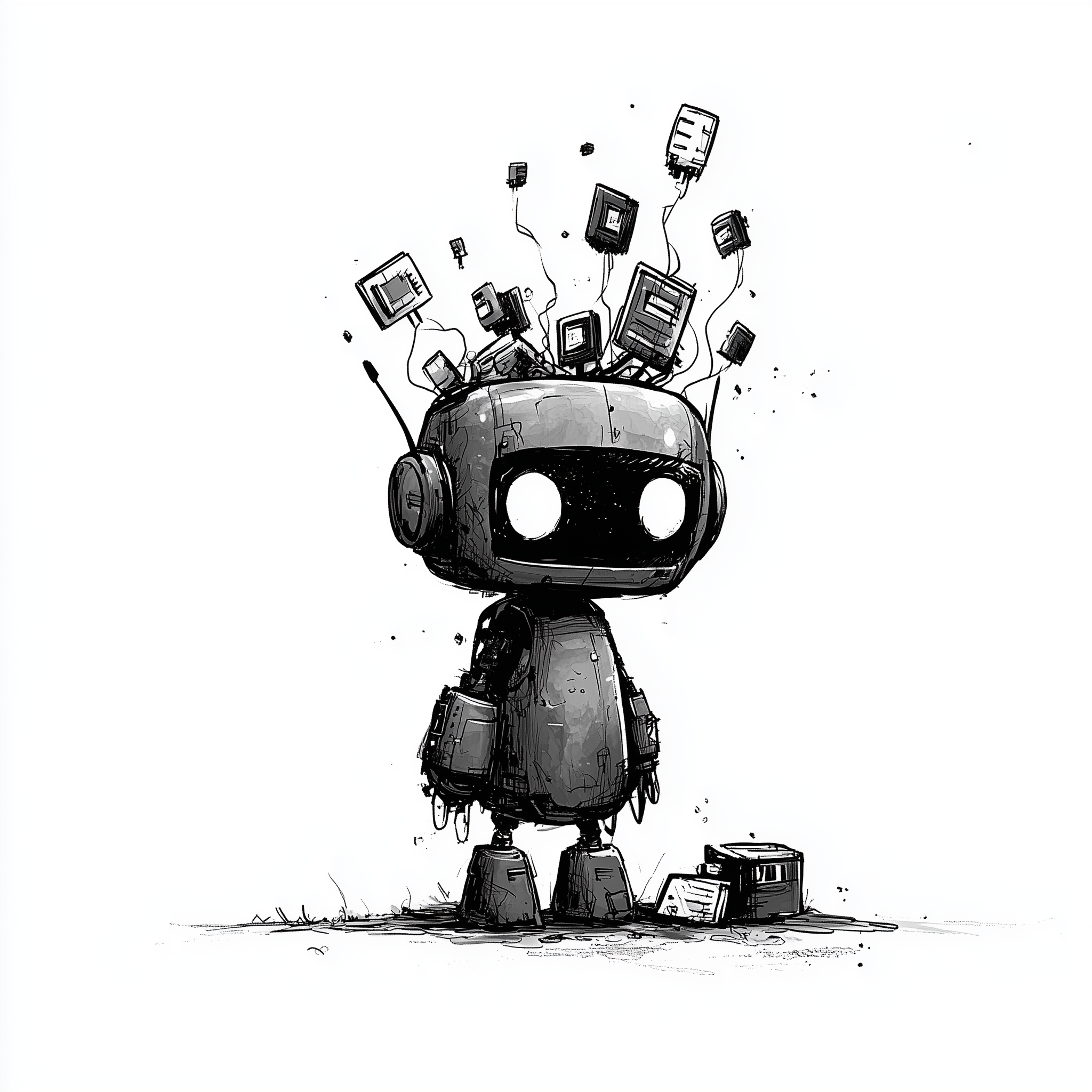
Skills are the software cartridges we slot into that machine. By moving configuration out of the System Message and into the filesystem, we solve the context window crisis and create a library of reusable, deterministic assets.
The era of the "Monolithic Agent" is drawing to a close. The era of the Modular Skill has begun.