The Death of the Pixel * When the Command Line Becomes the Air Itself

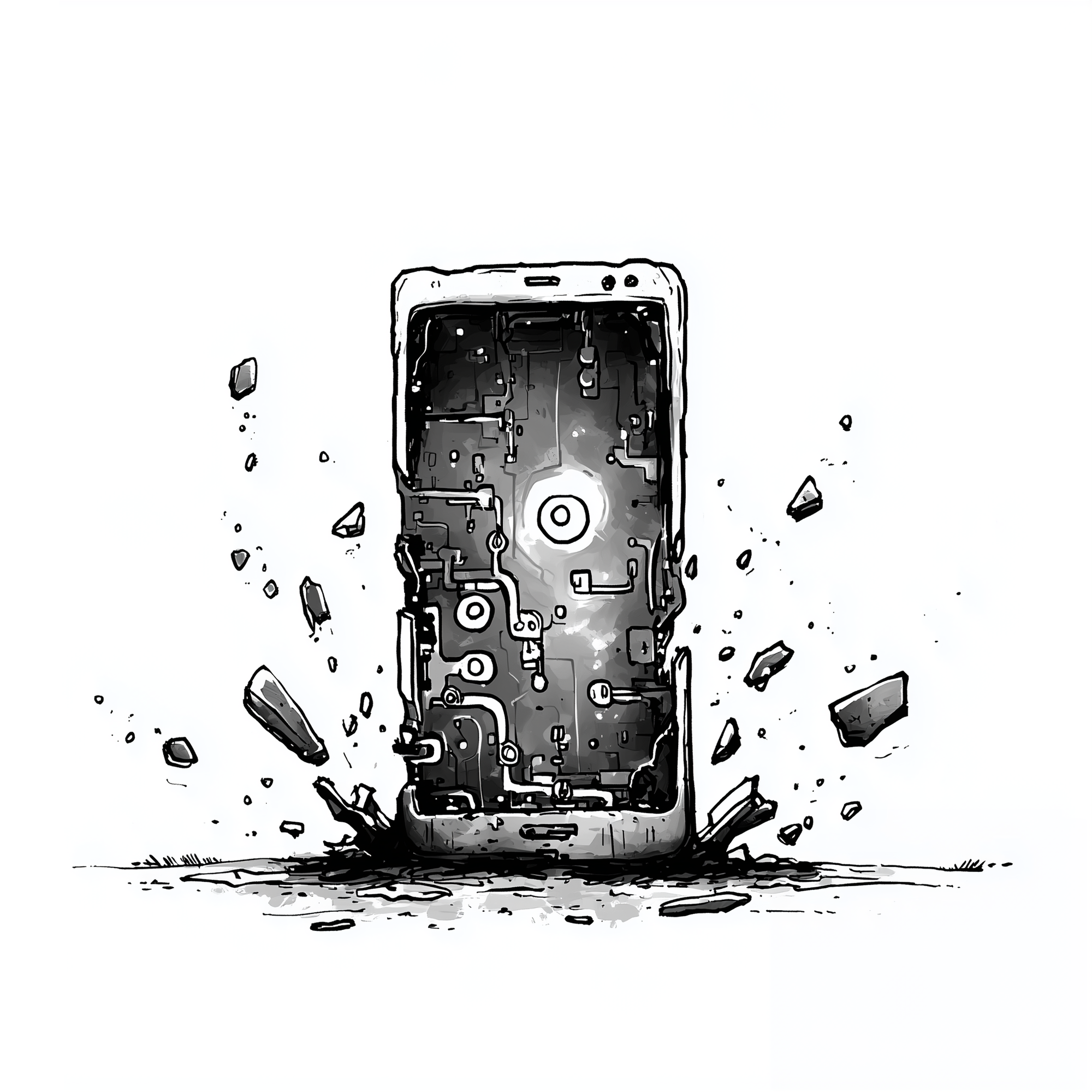
For fifteen years, you have lived inside a glass coffin. You have mistaken the glowing rectangle in your pocket for a cockpit, but it is a cage. You have accepted the "Tyranny of the Tap" - the humiliating ritual of translating your complex, fluid human intent into a clumsy pantomime of pokes, swipes, and pinches - as the price of admission to the digital world.
That era is over. The screen was not a destination; it was a bottleneck. And the architects of the future are preparing to shatter it.
The recent intelligence regarding OpenAI’s aggressive mobilization - unifying its engineering teams to overhaul audio models and acquiring Jony Ive’s design firm to build a dedicated, screenless device - is not a product rumor. It is a declaration of war on the graphical user interface. Silicon Valley has realized a brutal truth: the speed of AI thought has outpaced the bandwidth of the human thumb. To constrain an agent behind glass is to cripple it.
We are witnessing the physical manifestation of the Agent-First Era. The interface is dissolving. The new command line is the air itself.
The Latency of Glass * Why the Interface is a Strategic Liability
The graphical user interface is a tax on execution. In chapter 1 of my book on AI Agents, we defined the Friction Tax: the cognitive cost levied by every interaction with a screen. Every time you unlock your phone, locate an app, wait for it to load, and navigate a menu, you are burning cognitive fuel. You are acting as the manual transmission for your own digital life.
OpenAI isn't pivoting to audio because it's "immersive." They are pivoting because it is efficient. The shift to a voice-first, screen-less form factor is an attempt to secure the ultimate Time-to-Outcome (TtO) Dividend.
Consider the physics of the interaction. To book a flight on a screen requires focused visual attention, manual dexterity, and a sequence of fifty distinct interactions. To book a flight with voice requires a single sentence: "Get me on the 4 PM to New York." The screen forces you to do the work. The audio interface forces the machine to do it.
This is the architectural shift that would have saved a builder like Natali Gurn. In her pitch to venture capitalists, she was humiliated not by her technology, but by the clumsy pantomime of tapping through a demo app. She tried to force a creature of pure logic into a cage of pixels. OpenAI understands what Natali learned too late: the most powerful interface is the one that isn't there.
Toys vs. Weapons * The Lesson of Day Zero Failures
Skeptics will point to the recent, high-profile failures of screenless devices like the Humane AI Pin or the Rabbit R1 as proof that this future is a mirage. This is a failure of strategic analysis. These devices did not fail because the paradigm was wrong; they failed because they were "toys"... brittle wrappers around generic models, lacking the architectural integration required to handle the chaos of reality. They brought a knife to a gunfight.
You must see them not as failures, but as early reconnaissance units that were slaughtered on the beachhead. They proved the demand but lacked the ammunition.
OpenAI is not building a toy. With a war chest of billions and the design pedigree of Jony Ive, they are forging a weapon. They are building a device where the hardware is merely a thin skin over a planetary-scale intelligence. When they launch, they will not be asking you to tap a screen. They will be asking you to converse with a Second Self that has the context, memory, and agency to act.
The Operating System for Reality * Conquering the Air
The ultimate prize in this war is not hardware sales. It is the Operating System for Reality.
Apple and Google currently own the glass in your pocket, which gives them a toll booth on every digital interaction you have. They own the visual layer. OpenAI cannot win a war for the screen; the incumbents are too entrenched. So, they are changing the battlefield. By moving to audio, they are bypassing the eyes and seizing the ear. They are attempting to capture the ambient layer of reality—the air itself.
If they succeed, the smartphone becomes a dumb terminal... a backend processor for the intelligent voice in your ear. The "app" as a unit of software distribution dies. It is replaced by the Great Re-Bundling, where a single, audio-first agent becomes the universal interface for every service. The gatekeeper changes. The power shifts from the landlord of the App Store to the architect of the conversation.
The Intimacy Trap * The Price of the Whisper
However, this liberation comes with a non-negotiable price tag. A screen waits for you to look at it. An audio agent must always be listening.
To function as a true "companion" - as Sam Altman envisions - this device requires total, ambient awareness of your reality. It must hear the tone of your voice, the background noise of your office, the private conversations that define your context. This is the Benevolent Surveillance Dilemma.
You are being offered a trade: total convenience in exchange for total intimacy. The device cannot help you if it does not know you. This creates a new vector for the "Atrophy of Character" we saw with Ennis Tece’s daughter, Maya, in the park (Part V). Her instinct to ask the air for a solution to her scraped knee - "How do I learn with no more falling?" - is the logical endpoint of an audio-first world. When the answer is always a whisper away, the muscle of inquiry begins to rot.
OpenAI’s promise of a device that acts less like a tool and more like a companion is a warning label disguised as a feature. If you do not govern this interaction with the protocols of the Confidant’s Contract (Chapter 16), you are not buying a device; you are outsourcing your inner monologue to a server farm.
The Verdict
The screen was a training wheel for a species learning to communicate with a global network. We have mastered the lesson. Now, the training wheels are coming off.
You must prepare your organization for this shift. If your customer interaction model relies on visual persuasion - on the layout of a website or the color of a button - you are building on a foundation of sand. In a Zero UI world, your brand is not what you look like; it is how reliably you answer.
The black rectangle is dying. Do not mourn it. Orchestrate what comes next.
This article builds on the ideas in the book "AI Agents: They Act, You Orchestrate." To get the most out of this discussion and understand the bigger picture, reading the book first is recommended. Think of the book as the foundation and this article as an added insight.
— Learn more in the book!